
History
Indian Coin History
A concise guide to Indian coin history from ancient punch-marked coins to Sultanate, Mughal, British India and Republic India coinage.
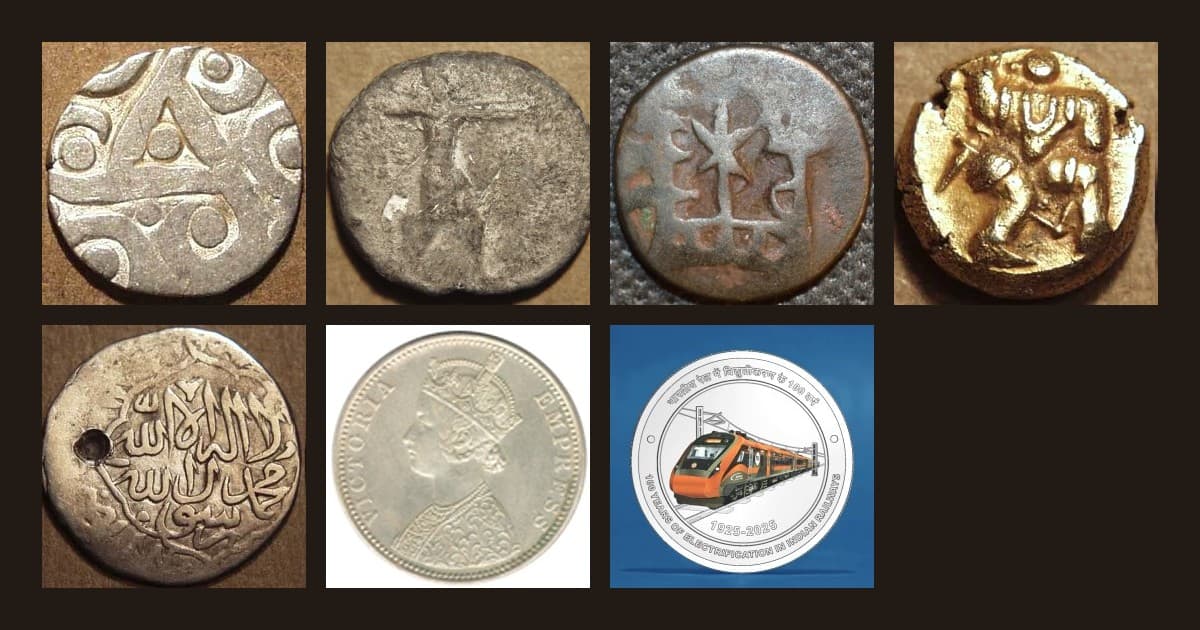
Indian coin history at a glance
Indian coin history begins with early punch-marked silver coins used by Janapadas and large ancient states. These pieces carried symbols rather than ruler portraits, making weight, metal, and punch combinations important identification clues.
Later, Indo-Greek, Kushan, Gupta, Sultanate, Mughal, colonial, and Republic issues each added new visual languages. Portraits, Brahmi, Kharoshthi, Persian legends, royal titles, mint names, denomination systems, and national emblems all help place a coin within its historical period.

Major periods collectors should know
A practical Indian coin history timeline moves from ancient punch-marked and dynastic coins to medieval Sultanate issues, then to the Mughal rupee system, regional kingdoms, princely states, British India portrait coinage, and modern Republic India coins.
Collectors can use this sequence as a first sorting method. A coin with Persian calligraphy may point toward Sultanate or Mughal attribution, while a uniform milled coin with a monarch portrait often belongs to British India. A coin with the Lion Capital of Ashoka belongs to the Republic period.
How to continue research
Start with the visible evidence: metal, denomination, weight, diameter, script, symbols, ruler name, date, and mint mark. Then compare the coin with era-specific catalogue pages and Knowledge Hub guides.
For deeper study, move from this overview to focused pages on mint marks, identifying old Indian coins, Mughal coins, British India coins, Republic India coins, and rare Indian coins.