Key Takeaways & Executive Summary
Learn how Mughal coins are identified through Persian legends, emperor names, regnal years, mint names, rupees, dams and mohurs.
Carefully inspect the date, mint mark, metal purity, and die alignment.
Always preserve natural surface integrity and avoid harsh chemical treatments.
Cross-reference catalog numbers with verified numismatic references before purchase.
Why Mughal coins matter
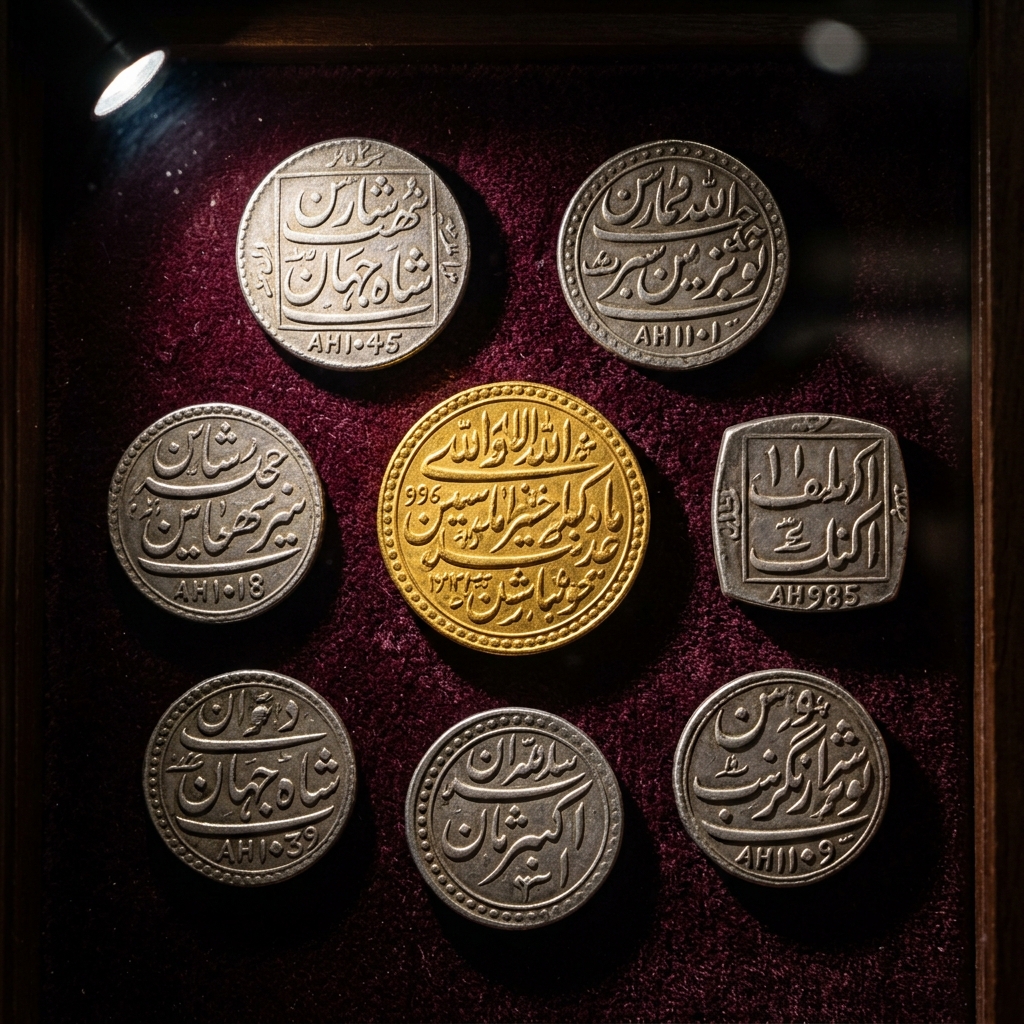
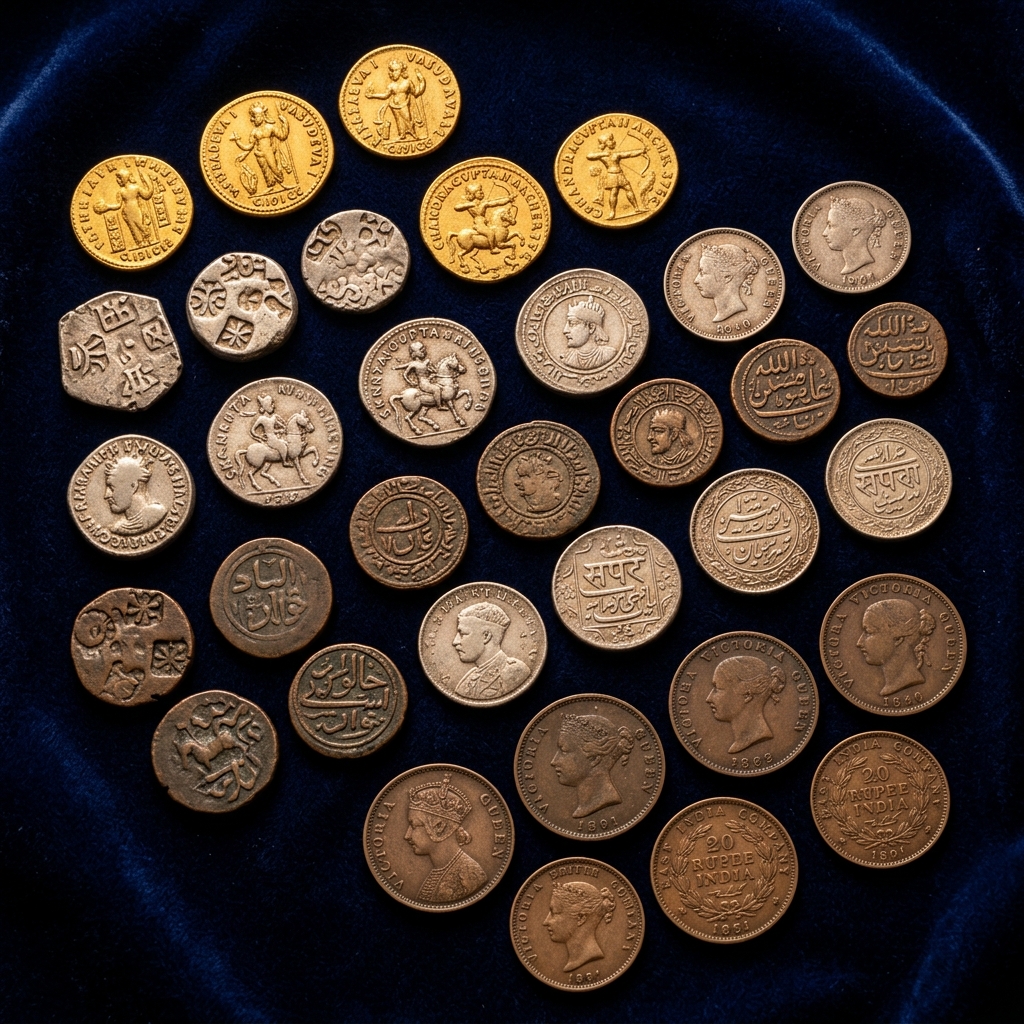
Mughal coins are central to Indian numismatics because the empire created a powerful and long-lasting monetary system. The silver , copper dam, and gold mohur became important standards across large parts of the subcontinent.
Mughal coins usually rely on inscriptions rather than portraits. Their beauty often comes from calligraphy, names, dates, and carefully balanced legends.
Identification clues on Mughal coins
To identify Mughal coins, look for the emperor name, name, Hijri date, and regnal year. Many pieces use Persian or Arabic-script legends, so partial readable words can be enough to narrow the ruler or .
Akbar, Jahangir, Shah Jahan, Aurangzeb, and later Mughal rulers each have recognizable patterns and coinage styles. names can be especially important for attribution and .
Common collector mistakes
Do not identify a Mughal coin from one side alone if the other side is available. The date, , ruler, and may be split across both sides.
Also watch for harsh , clipped edges, casting copies, and fantasy pieces. A beautiful old-looking is not of authenticity.
Explore the details
Was this numismatic guide helpful?
Your feedback helps our curatorial editorial team refine and expand our research.